Categories
Newsletter

Public Health has to Embrace Complexity to Move Forward

Global Action to End Smoking Logo

Global Action Community Newsletter

“I have remained smoke-free thanks to vaping and other nicotine products like pouches and lozenges. My two great grandkids are the first generation in my family to grow up in a home without smoking.”

– Skip from the United States of America

Public health has to embrace complexity to move forward.

As a clinical psychologist by training, I have always been fascinated by the human brain. Biology has created a wonderfully efficient machine capable of taking in tremendous amounts of information, storing the most useful bits, and applying it to make rapid choices in new situations.

In the life-or-death situations we faced thousands of years ago, our brains evolved to prefer simpler, black and white information. Stark differences led to faster decision-making, which could make the difference between surviving or not. As a result, our brains still prefer to break down issues into the easiest, most digestible components possible.

Today, when we’re rarely in mortal peril, the preference for simplicity can backfire. We tend to shy away from nuance. This has all kinds of consequences, including in my field of public health, where avoiding complexity can lead to the spread of misinformation.

If you’re a person who smokes, you’ve probably heard from other public health organizations that it is imperative that you quit, and that nicotine is the addictive substance that makes it hard to do so.

Both of these statements are true, but they don’t tell the full story. Nicotine on its own is not harmless, and it is highly addictive. However, it is not the cause of most of the severe negative health consequences caused by smoking.

In fact, many scientists—including those at the U.S. Food and Drug Administration— have noted that there is a continuum of risk when it comes to using nicotine. Cigarettes, cigars, and other forms of combustible tobacco are at the most dangerous end, while products like e-cigarettes, nicotine pouches, and nicotine replacement therapies are on the other

Submit a question on the latest quitting research, and we may answer it in an upcoming newsletter.

CLICK HERE TO SEND US YOUR ANSWER

In health care settings, providers usually rely on the quick and easy message to consumers that no nicotine products are safe, and that quitting all forms of nicotine is best for long-term health. This messaging is straightforward, and therefore easy to understand, and also technically true.

But this over-simplified message has big, unintended consequences. It has led many adults who smoke and health care providers to believe that nicotine in all forms is dangerous—which makes some people who smoke and are struggling to quit unwilling to try reduced-risk nicotine products. Worse, some people who have successfully quit smoking by using less-risky nicotine products return to cigarettes for a misplaced fear that these newer products are just as dangerous, or even more harmful.

These products, including e-cigarettes, certainly have health risks, and should not be used by people who do not smoke. And at the same time, there are ample data that products like authorized e-cigarettes are significantly less harmful than cigarettes. There is also lots of data that suggests that they are better at helping adults who smoke quit when compared to traditional nicotine replacement therapies.

We have the space to embrace nuance. To commit to ending the smoking epidemic, it’s time we take the time to slow down and make sure we have all the facts.

All my best,

Erik Augustson, PhD, MPH, FSBAM
VP of Programs
Global Action to End Smoking

By the Numbers

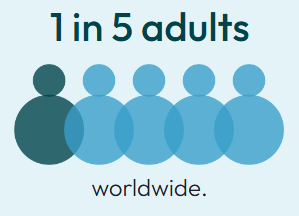
Tobacco use disorder – or being addicted to the nicotine in cigarettes and other tobacco products – affects more than
In reality, tobacco and nicotine products vary widely in how they impact health.

Learn more about the nicotine continuum of risk here.

GLOBAL ACTION IN THE NEWS
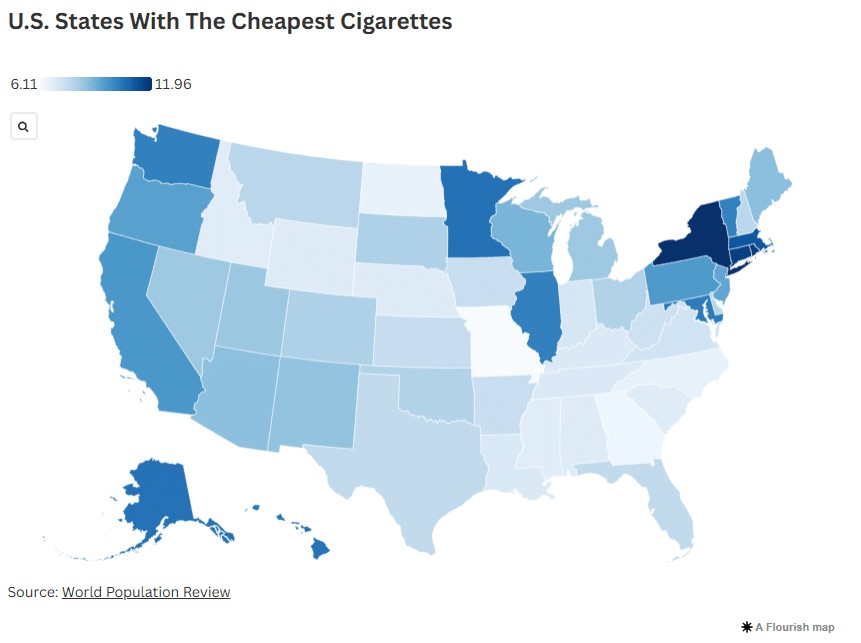
Global Action weighs in on cigarette prices around the U.S.

Cigarette prices in America vary from $6.11 to $11.50 per pack, the international publication Newsweek created a map of how these prices vary across states. In states where cigarettes are less expensive, smoking rates tend to be higher.

Cliff Douglas, Global Action’s president and CEO, told Newsweek:

 “The evidence is powerful that raising taxes on cigarettes is one of the most effective ways to reduce smoking and encourage more people to quit entirely. But prices alone are often not enough to fully support a person quitting; states must also ensure that other quitting resources, including nicotine replacement therapies, are easily accessible.

For those adults who can’t or otherwise won’t stop using nicotine, regulated reduced-risk nicotine products, including e-cigarettes and nicotine pouches, must also be available. These products are significantly less harmful than cigarettes and can reduce

the long-term health risks for people who smoke and switch entirely to them.

The best tobacco taxation strategy for public health is a risk-proportionate one—to tax lethal combustible cigarettes at a higher rate than reduced-risk products like e-cigarettes or nicotine pouches.”

Read the full story on Newsweek here.

Tobacco and health around the world

Country snapshot: India

In 2022, an estimated 253 million people (200.2 million males and 53.5 million females) aged 15 years and older were tobacco product users in India. This positions the country as the 2nd globally and the 1st in the WHO South-East Asia Region in terms of number of tobacco users.

  • According to the National Family Health Survey 2019-21, tobacco use prevalence was highest in males aged 50-64 with 52.8%; the highest prevalence rate for females, in comparison, was 18.6% for those 65 and older.
  • Tobacco was responsible for an estimated 1 million deaths, which is about 17.8% of total deaths.
  • Of tobacco-related deaths, 836.1 thousand or 79.8% were due to smoking, and 220.6 thousand or 21.0% were due to secondhand smoke.

For references and to view other country profiles, visit our pages on  

Tobacco and Health Around the World.

Thank you for your support

We are grateful for the Thomson, and Barbara Foundation’s generous gift of 60,000,000 MWK (roughly $34,200 USD) to the Agricultural Transformation Initiative, a subsidiary of Global Action to End Smoking. This funding will support the construction and costs associated with the construction of the Malawi Centre for Agricultural Transformation on the Lilongwe University of Agriculture and Natural Resources, NRC Campus in Lilongwe, Malawi.

We’re excited to announce that Global Action is now actively inviting philanthropic support to expand our mission and accelerate the impact of our programs. Whether you’re an individual donor, a corporate partner, or part of a foundation, your support can help drive groundbreaking research, effective cessation programs, and transformative agricultural initiatives for tobacco farmers transitioning to sustainable livelihoods.

Every donation, no matter the size, fuels our mission to save lives and create healthier communities around the globe. Together, we can reduce smoking-related harm, advocate for public health equity, and invest in lasting change.

Get to Know Global Action

Global Action has awarded more than 175 grants to institutions that support the work of over 100 scientists, covering 46 countries on four continents.

Our organization is an independent, U.S. nonprofit 501(c)(3) grantmaking organization whose mission is to end combustible tobacco use, which remains the leading preventable cause of death globally. Through September 2023, Global Action received charitable gifts from PMI Global Services Inc. Global Action does not seek or accept funding from companies that produce tobacco or non-medicinal nicotine products.

To learn more about our work, visit our website.

Disclaimer: This newsletter does not provide medical advice. The information, including but not limited to, text, graphics, images and other material contained in this newsletter are for informational and educational purposes only and does not constitute providing medical advice or professional services. No material in this newsletter is intended to be a substitute for diagnosing or treating a health problem or disease. Those seeking personal medical advice should consult with a licensed physician or other qualified health care provider. Always seek the advice of your licensed physician or other qualified health care provider regarding a medical condition or with any questions you may have regarding treatment and before undertaking a new health care regimen. Never disregard professional medical advice or delay in seeking it because of something you read in this newsletter. No physician-patient relationship is created by this newsletter. Global Action doesn’t make representations, express or implied, with respect to the information provided here.

Categories
Newsletter

Read Science like a Scientist

Global Action to End Smoking Logo

Global Action Community Newsletter

“I carried a lot of shame as someone who smoked. But since transitioning from smoking to vaping, I’m proud of myself, and I have renewed confidence.”

– Janine from Canada

Overcome misinformation by reading the news like an expert.

Quitting smoking is hard, and the journey is only further complicated by an abundance of online information, not all of which is reliable. News articles are a great starting place to begin your research journey, but the media landscape isn’t perfect: Some stories present relevant, accurate information, but others rely on flashy headlines or rushed reporting that lack the nuance you need to make an informed decision.

At Global Action, we believe the best information comes from the latest research itself. You can find the tools you need by exploring the science yourself—even if you’re not a scientist—with these simple tricks.

First, you need to find the papers themselves. You can either begin searching through a scientific journal database like PubMed, or through a quick news search. Articles from credible news outlets will link to the original papers they are writing about. Be wary of news stories that don’t provide a link to any of the research they discuss.

Ideally, you’d be able to evaluate the full text of the research to determine how much weight to give it. But if you don’t have time or access to the full text, the abstract—a brief section at the beginning of every research paper—can tell you a lot.

Submit a question on the latest quitting research, and we may answer it in an upcoming newsletter.

CLICK HERE TO SEND US YOUR ANSWER

Abstracts serve as an outline of the paper. They should be able to give you background information on the issue at hand, an overview of how the research was conducted, topline results, and what the results mean.

As you’re reading through these first few paragraphs, ask yourself what you can assess from the work. Was this a trial with human participants, or animal or cell models? Or is the study a data analysis, in which researchers accessed an existing body of work and used statistics to try to find a relationship between certain behaviors and outcomes? How many people or data points were included?

After you understand what the study was testing, skip ahead to the end of the abstract. Generally, the last sentences will show you what conclusions the authors came to. Ask yourself: Given how the researchers carried out this trial, and what I already know, does this conclusion make sense?

You can always go back and skim the rest of the abstract for other details that may fully describe the work. No study is perfect, and it’s important to see if you can find the limitations to what you can know from a paper. Asking yourself these basic questions is a start that gives you a rough sense of what each individual paper can—and can’t—tell you.

To learn more about how best to read a scientific abstract for yourself, check out our detailed guide here. Happy reading! 


All my best,

Elsa Larson, PhD, M.S.
Director of Programs, 
Global Action to End Smoking

The big idea

Read science like a scientist

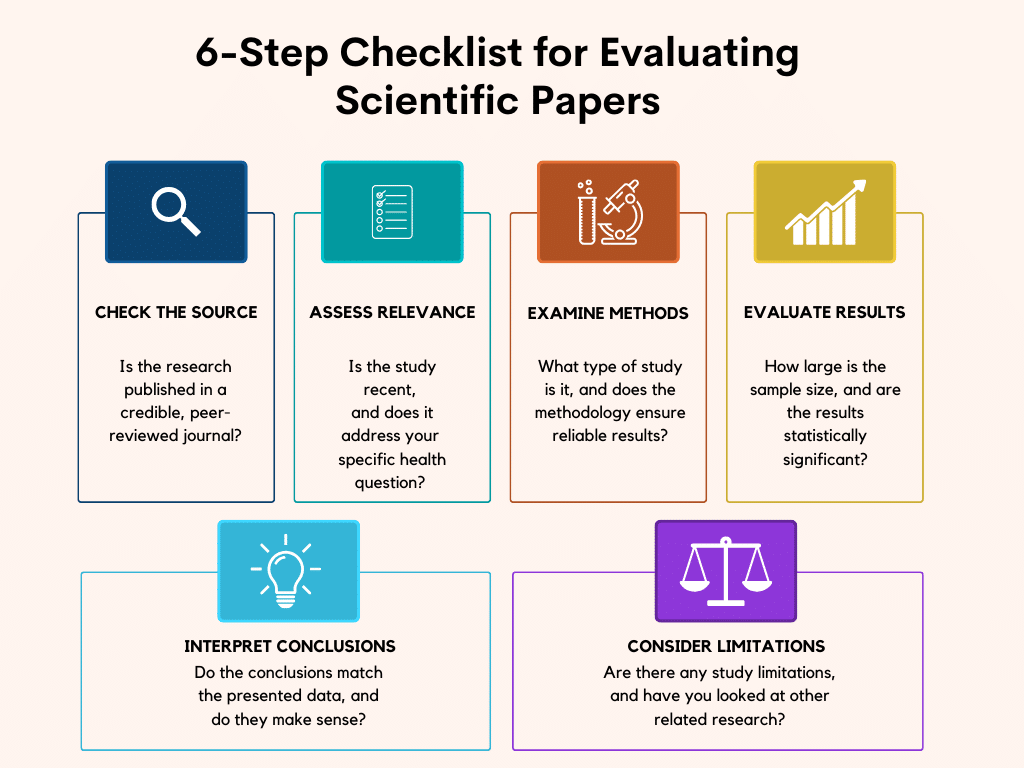
As you see new headlines or scientific papers about nicotine use or smoking cessation, ask yourself the following questions to get the most out of the work.

Learn More About Reading Scientific Articles Here

By the Numbers

of physicians globally mistakenly think nicotine causes COPD.

76%

Research conducted by Sermo and supported by Global Action found that in 2022, the majority of more than 15,000 doctors across 11 countries mistakenly believe that nicotine is responsible for the adverse health conditions including chronic obstructive pulmonary disease.

In reality, tobacco and nicotine products vary widely how they impact health.
Learn more about the nicotine continuum of risk here.

What’s one question you have about smoking cessation or nicotine use? Click here or the button below to send us your answer or reply to this email. We may even answer it in an upcoming issue.

More from the Global Action Community

“I smoked for 40 years. Every quit attempt failed, and as the failures mounted my confidence depleted to the point where I couldn’t face another failed quit attempt. I quit quitting and resigned myself to an abbreviated life.

One day, on a whim, I purchased an e-cigarette with absolutely no plan to quit smoking. I began with a tobacco flavor. During a two-week period I alternated between cigarettes and vaping. As my stash of cigarettes depleted I used my e-cigarette more often until I reached the last cigarette. That was when I decided to put off buying another pack “just to see.”

I never bought another pack of cigarettes. After many years of failed quit attempts and no plan to try again, I had in fact quit. I became accidental quitter. Thanks to vaping, I have maintained my smoke-free status for 9 years.”Janine from Canada

We want to hear from you: Click here to share your story of how you have quit or are trying to quit smoking. We may share your response in a future email!

Congratulations, Janine! The Global Action community is proud of you for reducing your health risks by quitting smoking combustible cigarettes.

Tobacco and health around the world

Country snapshot: The Philippines

In 2022, an estimated 16.4 million adults in the Philippines were tobacco products users. This positions the country as the 15th globally and the 4th in the WHO Western Pacific Region in terms of number of tobacco users.

  • Tobacco was responsible for an estimated 88.2 thousand deaths, which is about 22.2% of total deaths.
  • Of tobacco-related deaths, 73.0 thousand or 82.8% were due to smoking, and 18.4 thousand or 20.9% were due to secondhand smoke.

For references and to view other country profiles, visit our pages on:   

Tobacco and Health Around the World.

watch this

Cliff Douglas, CEO of Global Action to End Smoking, discusses the dramatic decline in youth smoking rates in the U.S. revealed by a recent Gallup survey. Douglas credits traditional tobacco control measures and the shift to much less hazardous alternatives as key contributors to this decline.

Get to Know Global Action

Global Action has awarded more than 175 grants to institutions that support the work of over 100 scientists, covering 46 countries on four continents.

Our organization is an independent, U.S. nonprofit 501(c)(3) grantmaking organization whose mission is to end combustible tobacco use, which remains the leading preventable cause of death globally. Through September 2023, Global Action received charitable gifts from PMI Global Services Inc. Global Action does not seek or accept funding from companies that produce tobacco or non-medicinal nicotine products.

To learn more about our work, visit our website.

Disclaimer: This newsletter does not provide medical advice. The information, including but not limited to, text, graphics, images and other material contained in this newsletter are for informational and educational purposes only and does not constitute providing medical advice or professional services. No material in this newsletter is intended to be a substitute for diagnosing or treating a health problem or disease. Those seeking personal medical advice should consult with a licensed physician or other qualified health care provider. Always seek the advice of your licensed physician or other qualified health care provider regarding a medical condition or with any questions you may have regarding treatment and before undertaking a new health care regimen. Never disregard professional medical advice or delay in seeking it because of something you read in this newsletter. No physician-patient relationship is created by this newsletter. Global Action doesn’t make representations, express or implied, with respect to the information provided here.

Categories
Newsletter

Welcome to our Community Newsletter

Global Action to End Smoking Logo

Global Action Community Newsletter

“It’s never too late to quit…you will still benefit from quitting. Nobody fails to quit; they just aren’t ready for the task in hand.”

Steve, former smoker of 50+ years, United Kingdom

Welcome to our Community Newsletter. We’re glad you’re here.

A large part of our work at Global Action to End Smoking is supporting life-saving research that raises awareness and explores real-world solutions to the smoking epidemic. But as we are marching forward in pursuit of improving public health, we see a need for something else: listening—really listening—to the lived experience of people who smoke, those who have quit, and those who are in all stages of their quitting journeys.  

It’s with that introduction that I welcome you to our community newsletter, which is dedicated to those most important to our work: you.  

I am passionate about our mission to end the harm caused by combustible tobacco smoking. In my nearly four decades working as a public health advocate fighting tobacco, I’ve noticed that some well-meaning experts in the field approach smoking cessation with top-down mandates that fail to address all the real-world obstacles to quitting. These efforts have left out roughly 1 billion people who continue to smoke worldwide.  

We believe there are more options, and the most recent scientific data backs us up. We support you trying existing smoking cessation tools you’ve likely heard about—nicotine patches, gum, or lozenges to name a few. We also embrace additional forms of reduced-risk nicotine products scientifically proven to be safer than combustible cigarettes. These products, such as e-cigarettes or nicotine pouches, have not yet approved as official smoking cessation tools, but may still help you quit and significantly reduce your health risks.

In other words, we are supportive of you finding the best way to quit smoking and reduce your risk. The most important goal is to help everyone stop using deadly cigarettes. Period. 

What are the challenges you have faced as someone who smokes and is trying to quit?

CLICK HERE TO SEND US YOUR ANSWER

There is a lot of misinformation about nicotine and these reduced-risk products. Some of the research that we supported found that as many as two-thirds of physicians around the world wrongly believe that nicotine itself causes the cancers we know are related to combustible tobacco. The truth is that it is actually caused by the thousands of other chemicals in tobacco smoke.

That’s why we’re here. In this community newsletter, you’ll get a monthly update on the latest nicotine and tobacco science and global regulations. You’ll hear from different members of our team, each of whom have their own unique reasons for wanting to help people quit, and all of whom are passionate about putting people first in public health.

Most importantly, you’ll hear from your peers as they share their quitting successes and challenges. You are not alone on this journey, and we know that we can accomplish more together.  


All my best,

Clifford  E. Douglas 
President and CEO of Global Action to End Smoking

By the Numbers

of people who smoke want to quit.

60%

This translates to 750 million people worldwide.

Quitting is hard and we want you to have all the tools you need to succeed.

What are the challenges you have faced as someone who smokes and is trying to quit? Click here or the button below to send us your answer, or reply to this email.

WE WANT TO HEAR FROM YOU.

Global Action in the news

GA provides scientific evidence in Supreme Court case

On September 3, 2024, Global Action to End Smoking filed an amicus brief with the U.S. Supreme Court in the case of Food and Drug Administration v. Wages and White Lion Investments, LLC, regarding the Food and Drug Administration’s (FDA’s) regulation of e-cigarettes.

An amicus brief is a written argument submitted to a court by a non-party to the case. Its purpose is to provide additional information or arguments that may help the court make its decision.

Global Action submitted the brief as a neutral expert with great interest in the public health ramifications of the FDA’s regulation of these products. Of all the briefs submitted, ours is the only one to support science and public health alone, and not one of the parties.
 
We believe the FDA should take a balanced approach that protects youth from exposure to nicotine, while making noncombustible, reduced-risk options available to adults who cannot or will not otherwise stop smoking. As we have seen youth e-cigarette use fall to reach its lowest level in a decade and youth smoking has plummeted to historic lows, there is a clear path forward to support adults who smoke with reduced-risk options.

For more reading, see our amicus brief, press release, and this Bloomberg Law article on all the briefs filed.

We welcome your feedback. Reply to this email or reach out to gacommunity@actiontoendsmoking.org with your thoughts on the SCOTUS case.

The big idea

Not all products that contain nicotine are equal.

The most important part of quitting smoking is moving away from cigarettes.

GET THE FACTS ABOUT THE CONTINUUM OF RISK

watch this

In this interview with Regulator Watch’s Brent Stafford, Cliff Douglas explains how his decades-long career in tobacco control led him to Global Action to End Smoking, and unpacks the dangers and consequences of dismissing the truth about reduced-risk nicotine products.

research corner

A snapshot of new scientific articles and discussion in the nicotine and tobacco space.

Disclaimer: This newsletter does not provide medical advice. The information, including but not limited to, text, graphics, images and other material contained in this newsletter are for informational and educational purposes only and does not constitute providing medical advice or professional services. No material in this newsletter is intended to be a substitute for diagnosing or treating a health problem or disease. Those seeking personal medical advice should consult with a licensed physician or other qualified health care provider. Always seek the advice of your licensed physician or other qualified health care provider regarding a medical condition or with any questions you may have regarding treatment and before undertaking a new health care regimen. Never disregard professional medical advice or delay in seeking it because of something you read in this newsletter. No physician-patient relationship is created by this newsletter. Global Action doesn’t make representations, express or implied, with respect to the information provided here.