

Global Action Community Newsletter
“I have remained smoke-free thanks to vaping and other nicotine products like pouches and lozenges. My two great grandkids are the first generation in my family to grow up in a home without smoking.”
– Skip from the United States of America
Public health has to embrace complexity to move forward.
As a clinical psychologist by training, I have always been fascinated by the human brain. Biology has created a wonderfully efficient machine capable of taking in tremendous amounts of information, storing the most useful bits, and applying it to make rapid choices in new situations.
In the life-or-death situations we faced thousands of years ago, our brains evolved to prefer simpler, black and white information. Stark differences led to faster decision-making, which could make the difference between surviving or not. As a result, our brains still prefer to break down issues into the easiest, most digestible components possible.
Today, when we’re rarely in mortal peril, the preference for simplicity can backfire. We tend to shy away from nuance. This has all kinds of consequences, including in my field of public health, where avoiding complexity can lead to the spread of misinformation.
If you’re a person who smokes, you’ve probably heard from other public health organizations that it is imperative that you quit, and that nicotine is the addictive substance that makes it hard to do so.
Both of these statements are true, but they don’t tell the full story. Nicotine on its own is not harmless, and it is highly addictive. However, it is not the cause of most of the severe negative health consequences caused by smoking.
In fact, many scientists—including those at the U.S. Food and Drug Administration— have noted that there is a continuum of risk when it comes to using nicotine. Cigarettes, cigars, and other forms of combustible tobacco are at the most dangerous end, while products like e-cigarettes, nicotine pouches, and nicotine replacement therapies are on the other
Submit a question on the latest quitting research, and we may answer it in an upcoming newsletter.
CLICK HERE TO SEND US YOUR ANSWER
In health care settings, providers usually rely on the quick and easy message to consumers that no nicotine products are safe, and that quitting all forms of nicotine is best for long-term health. This messaging is straightforward, and therefore easy to understand, and also technically true.
But this over-simplified message has big, unintended consequences. It has led many adults who smoke and health care providers to believe that nicotine in all forms is dangerous—which makes some people who smoke and are struggling to quit unwilling to try reduced-risk nicotine products. Worse, some people who have successfully quit smoking by using less-risky nicotine products return to cigarettes for a misplaced fear that these newer products are just as dangerous, or even more harmful.
These products, including e-cigarettes, certainly have health risks, and should not be used by people who do not smoke. And at the same time, there are ample data that products like authorized e-cigarettes are significantly less harmful than cigarettes. There is also lots of data that suggests that they are better at helping adults who smoke quit when compared to traditional nicotine replacement therapies.
We have the space to embrace nuance. To commit to ending the smoking epidemic, it’s time we take the time to slow down and make sure we have all the facts.
All my best,
Erik Augustson, PhD, MPH, FSBAM
VP of Programs
Global Action to End Smoking
By the Numbers
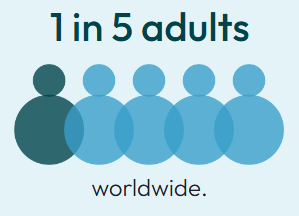
Tobacco use disorder – or being addicted to the nicotine in cigarettes and other tobacco products – affects more than
In reality, tobacco and nicotine products vary widely in how they impact health.
Learn more about the nicotine continuum of risk here.
GLOBAL ACTION IN THE NEWS
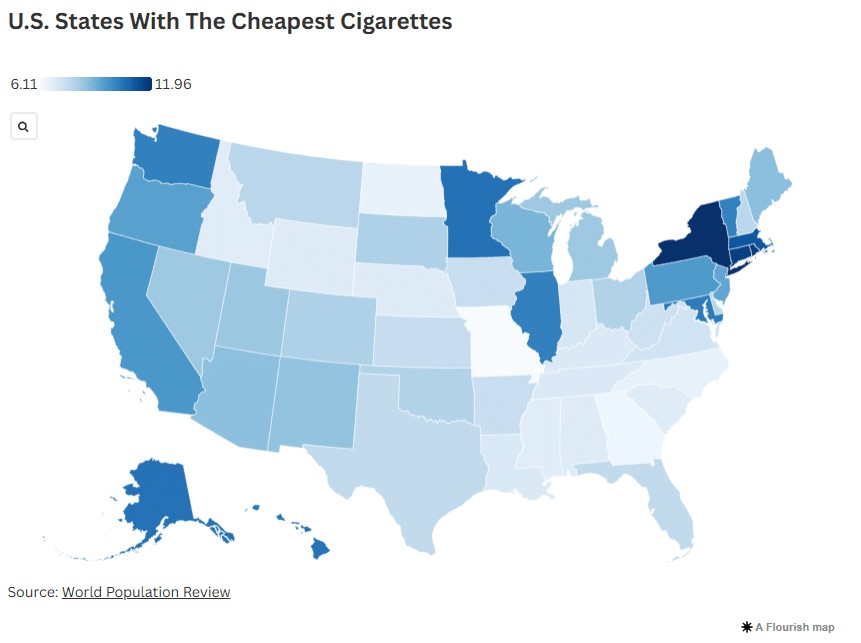
Global Action weighs in on cigarette prices around the U.S.
Cigarette prices in America vary from $6.11 to $11.50 per pack, the international publication Newsweek created a map of how these prices vary across states. In states where cigarettes are less expensive, smoking rates tend to be higher.
Cliff Douglas, Global Action’s president and CEO, told Newsweek:
“The evidence is powerful that raising taxes on cigarettes is one of the most effective ways to reduce smoking and encourage more people to quit entirely. But prices alone are often not enough to fully support a person quitting; states must also ensure that other quitting resources, including nicotine replacement therapies, are easily accessible.
For those adults who can’t or otherwise won’t stop using nicotine, regulated reduced-risk nicotine products, including e-cigarettes and nicotine pouches, must also be available. These products are significantly less harmful than cigarettes and can reduce
the long-term health risks for people who smoke and switch entirely to them.
The best tobacco taxation strategy for public health is a risk-proportionate one—to tax lethal combustible cigarettes at a higher rate than reduced-risk products like e-cigarettes or nicotine pouches.”
Read the full story on Newsweek here.
Tobacco and health around the world

Country snapshot: India
In 2022, an estimated 253 million people (200.2 million males and 53.5 million females) aged 15 years and older were tobacco product users in India. This positions the country as the 2nd globally and the 1st in the WHO South-East Asia Region in terms of number of tobacco users.
- According to the National Family Health Survey 2019-21, tobacco use prevalence was highest in males aged 50-64 with 52.8%; the highest prevalence rate for females, in comparison, was 18.6% for those 65 and older.
- Tobacco was responsible for an estimated 1 million deaths, which is about 17.8% of total deaths.
- Of tobacco-related deaths, 836.1 thousand or 79.8% were due to smoking, and 220.6 thousand or 21.0% were due to secondhand smoke.
For references and to view other country profiles, visit our pages on
Tobacco and Health Around the World.
Thank you for your support
We are grateful for the Thomson, and Barbara Foundation’s generous gift of 60,000,000 MWK (roughly $34,200 USD) to the Agricultural Transformation Initiative, a subsidiary of Global Action to End Smoking. This funding will support the construction and costs associated with the construction of the Malawi Centre for Agricultural Transformation on the Lilongwe University of Agriculture and Natural Resources, NRC Campus in Lilongwe, Malawi.
We’re excited to announce that Global Action is now actively inviting philanthropic support to expand our mission and accelerate the impact of our programs. Whether you’re an individual donor, a corporate partner, or part of a foundation, your support can help drive groundbreaking research, effective cessation programs, and transformative agricultural initiatives for tobacco farmers transitioning to sustainable livelihoods.
Every donation, no matter the size, fuels our mission to save lives and create healthier communities around the globe. Together, we can reduce smoking-related harm, advocate for public health equity, and invest in lasting change.
Get to Know Global Action
Global Action has awarded more than 175 grants to institutions that support the work of over 100 scientists, covering 46 countries on four continents.
Our organization is an independent, U.S. nonprofit 501(c)(3) grantmaking organization whose mission is to end combustible tobacco use, which remains the leading preventable cause of death globally. Through September 2023, Global Action received charitable gifts from PMI Global Services Inc. Global Action does not seek or accept funding from companies that produce tobacco or non-medicinal nicotine products.
To learn more about our work, visit our website.
Disclaimer: This newsletter does not provide medical advice. The information, including but not limited to, text, graphics, images and other material contained in this newsletter are for informational and educational purposes only and does not constitute providing medical advice or professional services. No material in this newsletter is intended to be a substitute for diagnosing or treating a health problem or disease. Those seeking personal medical advice should consult with a licensed physician or other qualified health care provider. Always seek the advice of your licensed physician or other qualified health care provider regarding a medical condition or with any questions you may have regarding treatment and before undertaking a new health care regimen. Never disregard professional medical advice or delay in seeking it because of something you read in this newsletter. No physician-patient relationship is created by this newsletter. Global Action doesn’t make representations, express or implied, with respect to the information provided here.